
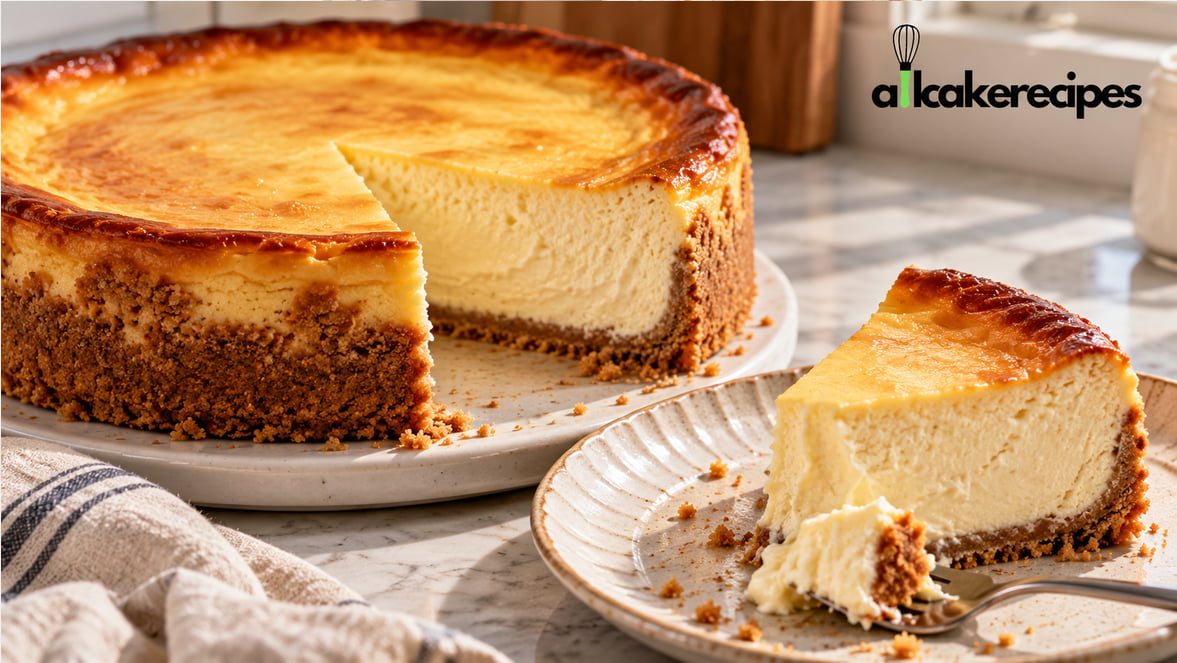
If you’re looking for the best New York cheesecake recipe, this homemade cheesecake is everything you could wish for: rich, smooth, incredibly creamy, and baked over a buttery graham cracker crust. Made with simple ingredients like cream cheese, sour cream, eggs, and vanilla, this classic New York-style cheesecake has a beautifully dense yet creamy texture and a gorgeous golden top. Perfect for birthdays, holidays, family gatherings, or enjoying with a cup of coffee, this easy-to-follow recipe includes step-by-step instructions and my favorite baking tips to help you make a delicious homemade cheesecake your family will love.
Table of Contents
A Little Story Behind This Homemade Cheesecake
There’s something special about baking a cheesecake at home.
Unlike cakes that fill the kitchen with a wonderful aroma and are ready to enjoy almost immediately, cheesecake teaches us a little patience.
You prepare the buttery crust, mix the silky cream cheese filling, and carefully place it in the oven. Then comes the hardest part: waiting for it to cool!
I love how such simple ingredients can turn into something so elegant. A beautiful cheesecake doesn’t need complicated decorations or fancy techniques. Sometimes, a golden top, a creamy center, and a few fresh strawberries are all you need.
And that first slice? The moment your fork passes through the smooth filling and reaches the buttery graham cracker crust makes every minute of waiting worthwhile.
This classic New York cheesecake is the kind of dessert that makes an ordinary afternoon feel like a special occasion.
Why You’ll Love This New York Cheesecake Recipe
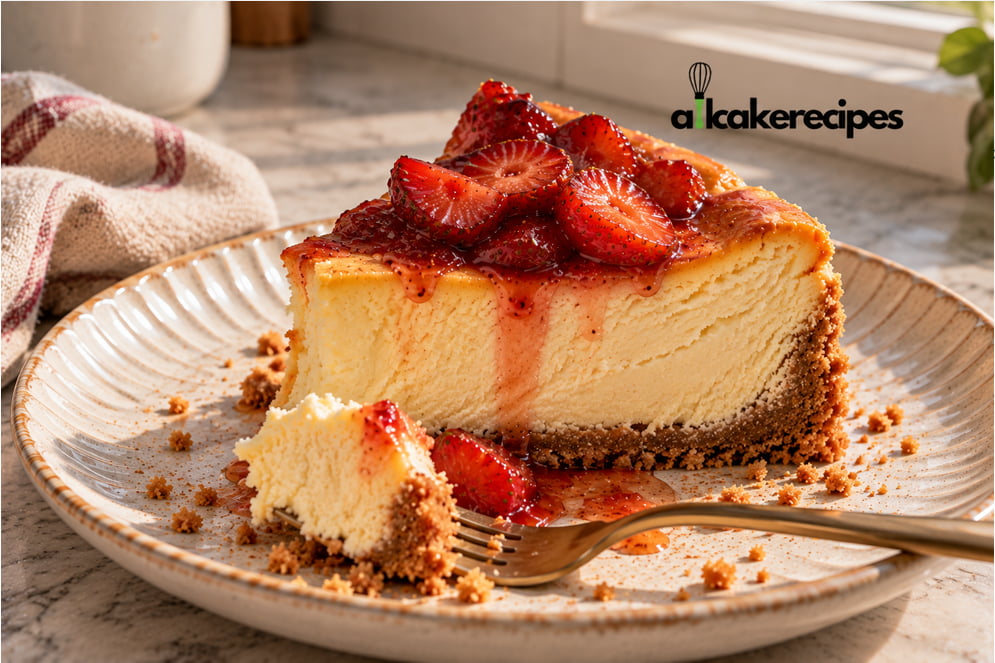
This homemade New York cheesecake is a wonderful dessert for anyone who loves rich, creamy cakes.
Here’s why you’ll want to make it again:
- Rich and creamy filling: Four packages of cream cheese create the signature texture of a classic New York-style cheesecake.
- Buttery graham cracker crust: A delicious crunchy base balances the smooth filling.
- Simple ingredients: Everything you need is easy to find in most grocery stores.
- Perfect for making ahead: Cheesecake tastes wonderful after chilling overnight.
- Great for special occasions: Serve it plain or decorate it with fresh strawberries, raspberries, or your favorite fruit.
- Easy-to-follow instructions: The recipe uses straightforward steps, with helpful tips for beginners.
Whether you’re making cheesecake for the first time or looking for a reliable homemade dessert, this recipe is a lovely choice.
What Makes New York Cheesecake Different?
New York-style cheesecake is famous for its rich, dense, and exceptionally creamy texture.
Unlike lighter cheesecakes, which may use whipped cream or airy fillings, a classic New York cheesecake relies on a generous amount of full-fat cream cheese.
This recipe also includes sour cream, which adds a delicate tang and helps create a smooth texture.
The result is a substantial yet creamy dessert with a lovely vanilla flavor and a buttery graham cracker crust.
New York Cheesecake vs. Regular Cheesecake
The biggest difference is usually the texture.
New York-style cheesecake tends to be denser and richer because of its high cream cheese content.
Other cheesecakes may be lighter, fluffier, or even prepared without baking.
If you love a creamy cheesecake that holds its shape beautifully when sliced, New York-style cheesecake is an excellent choice.
Ingredients for New York Cheesecake
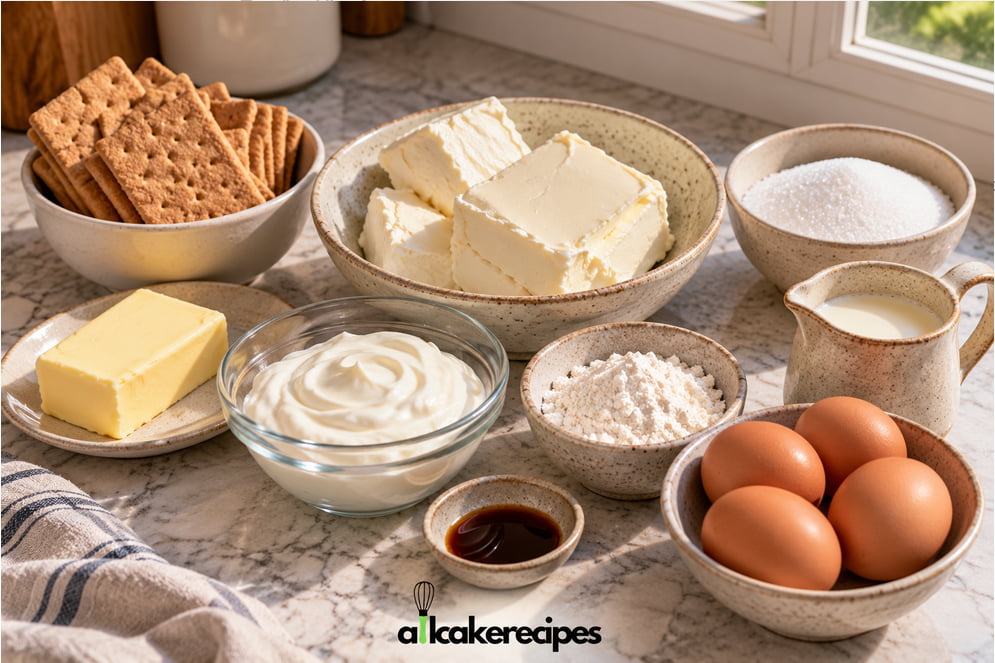
You only need a handful of ingredients to make this classic baked cheesecake.
For the best texture, bring the cream cheese, eggs, milk, and sour cream close to room temperature before mixing.
For the Graham Cracker Crust
- 15 graham crackers, finely crushed
- 6 tablespoons unsalted butter, melted
For the Cheesecake Filling
- 4 packages (8 oz each) cream cheese, softened (32 oz / 907 g total)
- 1½ cups granulated sugar
- ¾ cup milk
- 4 large eggs
- 1 cup sour cream
- ¼ cup all-purpose flour
- 1 tablespoon vanilla extract
Ingredient Notes and Substitutions
Cream cheese: Use full-fat block-style cream cheese for the best results. Spreadable cream cheese may produce a softer filling.
Graham crackers: These create the classic buttery cheesecake crust. If graham crackers aren’t available, digestive biscuits are a good alternative, although the flavor will be slightly different.
Butter: Melted butter binds the crumbs together and helps the crust hold its shape.
Sugar: Granulated sugar sweetens the filling without overpowering the cream cheese flavor.
Eggs: Eggs help the cheesecake set during baking. Add them one at a time and avoid overmixing.
Sour cream: This gives the cheesecake a smooth texture and a subtle tangy flavor.
Milk: Milk helps loosen the filling and contributes to its creamy consistency.
Flour: A small amount of all-purpose flour helps stabilize the filling.
Vanilla: Pure vanilla extract adds a warm, delicious flavor.
Best New York Cheesecake Recipe
Ingredients
Equipment
Method
- Preheat the oven to 350°F (175°C). Lightly grease a 9-inch springform pan and make sure it is securely assembled.
- Crush the graham crackers into fine crumbs using a food processor or rolling pin. Mix with the melted butter until evenly coated.
- Transfer the crumbs to the springform pan. Press firmly and evenly across the bottom using a measuring cup or spoon.
- Beat the softened cream cheese and sugar in a large bowl until smooth and creamy. Scrape down the sides of the bowl.
- Gradually mix in the milk. Add the eggs one at a time, mixing gently after each addition. Avoid overmixing.
- Add the sour cream, flour, and vanilla extract. Mix on low speed until smooth and just combined.
- Pour the filling over the crust and smooth the top. Place the pan on a baking sheet. Bake for approximately 1 hour, until the edges are set and the center still wobbles gently.
- Turn off the oven and leave the cheesecake inside with the door slightly open for approximately 1 hour. Remove and cool briefly at room temperature. Refrigerate within 2 hours of removing it from the oven.
- Cover and refrigerate for at least 6 hours, preferably overnight, until completely chilled and set.
- Carefully remove the springform ring. Slice with a sharp knife dipped in warm water, wiping between cuts. Serve plain or with fresh strawberries.
Notes
- Use room-temperature cream cheese, eggs, and sour cream for a smooth filling.
- Avoid overmixing after adding the eggs to help prevent cracks.
- The cheesecake is ready when the edges are set and the center still wobbles gently.
- Refrigerate for at least 6 hours, preferably overnight, before serving.
How to Make New York Cheesecake
Making a classic New York cheesecake at home is easier than you might think.
The most important things are to use softened cream cheese, avoid overmixing the filling, and allow enough time for the cheesecake to cool and chill.
Step 1: Preheat the Oven and Prepare the Pan
Preheat your oven to 350°F (175°C).
Lightly grease a 9-inch springform pan to help prevent the cheesecake from sticking.
Make sure the bottom and sides of the pan are securely assembled.
Step 2: Make the Graham Cracker Crust
Place the graham crackers in a food processor and pulse until finely crushed.
Alternatively, place them in a sealed bag and crush them with a rolling pin.
Transfer the crumbs to a medium mixing bowl and add the melted butter.
Stir until the crumbs are evenly coated and resemble wet sand.
Step 3: Press the Crust into the Pan
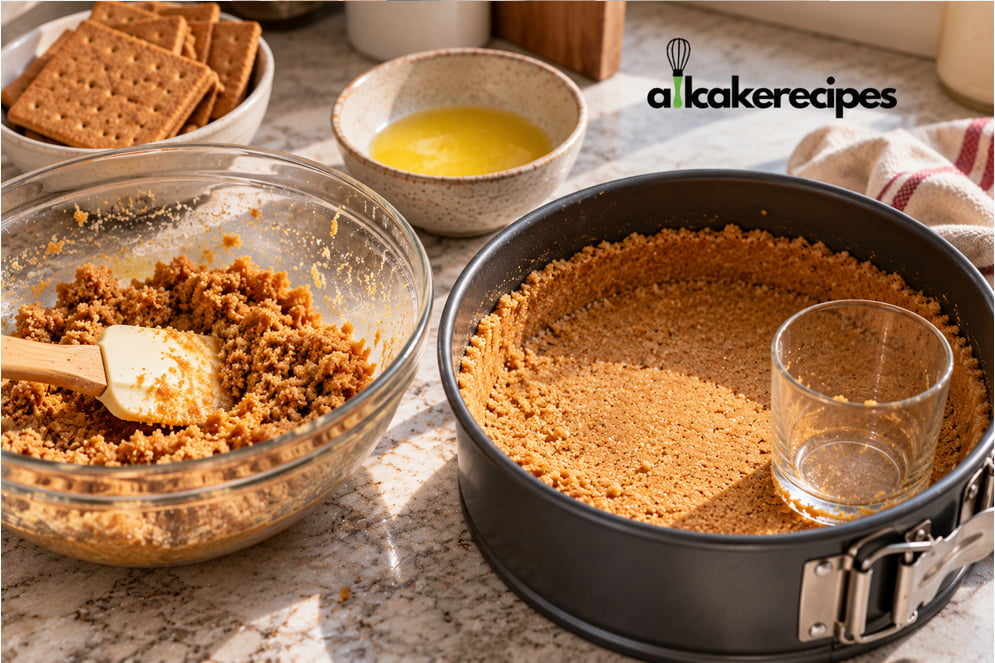
Transfer the graham cracker mixture to the prepared springform pan.
Using the bottom of a measuring cup or the back of a spoon, press the crumbs firmly and evenly across the bottom.
Set the crust aside while preparing the cheesecake filling.
Step 4: Beat the Cream Cheese and Sugar
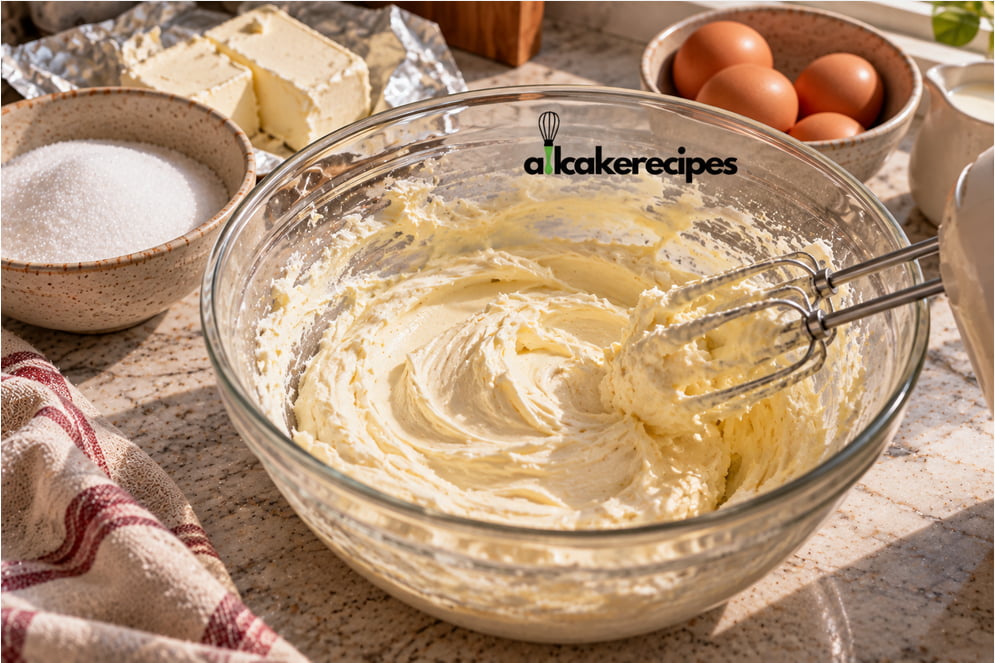
In a large mixing bowl, beat the softened cream cheese and granulated sugar together until smooth and creamy.
Scrape down the sides of the bowl to make sure no lumps remain.
Mix at low to medium speed rather than whipping too much air into the filling.
Step 5: Add the Milk and Eggs
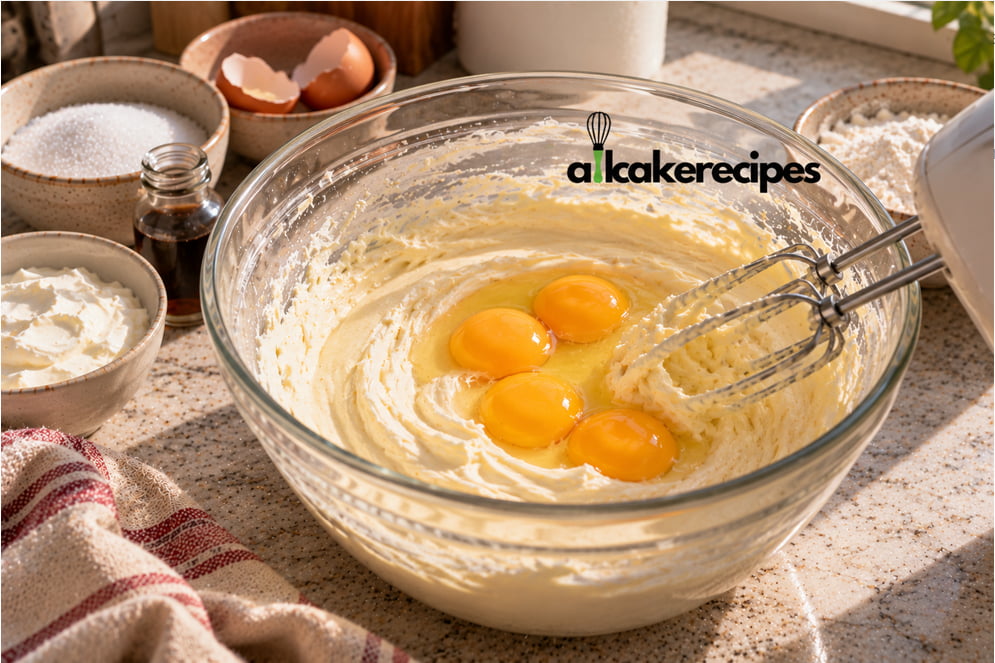
Gradually add the milk and mix until incorporated.
Add the eggs one at a time, mixing gently after each addition.
Stop mixing as soon as each egg is combined.
Overmixing can introduce excess air, which may cause the cheesecake to rise and crack while baking.
Step 6: Add the Sour Cream, Flour, and Vanilla
Add the sour cream, all-purpose flour, and vanilla extract.
Mix on low speed until the ingredients are combined and the filling is smooth.
Scrape down the bowl if necessary.
Avoid beating the mixture longer than needed.
Step 7: Fill the Pan and Bake
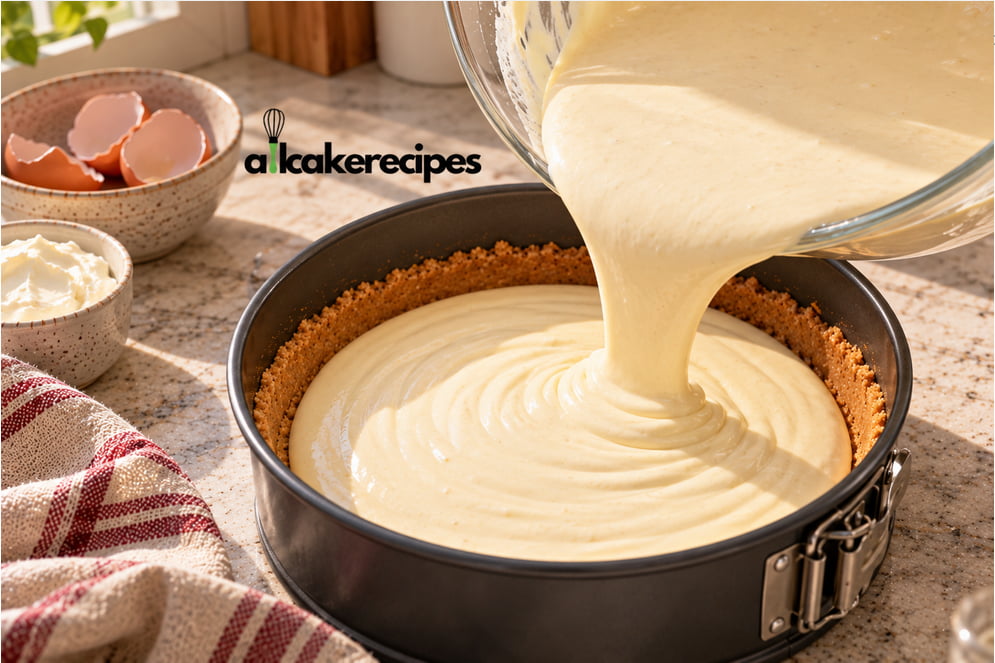
Pour the cheesecake filling over the prepared graham cracker crust.
Smooth the surface gently with a spatula.
Place the springform pan on a baking sheet to catch any possible drips.
Bake in the preheated oven for approximately 1 hour.
The cheesecake is ready when the edges look set but the center still has a gentle wobble when the pan is lightly shaken.
The center will continue to set as the cheesecake cools.
Step 8: Cool the Cheesecake Slowly
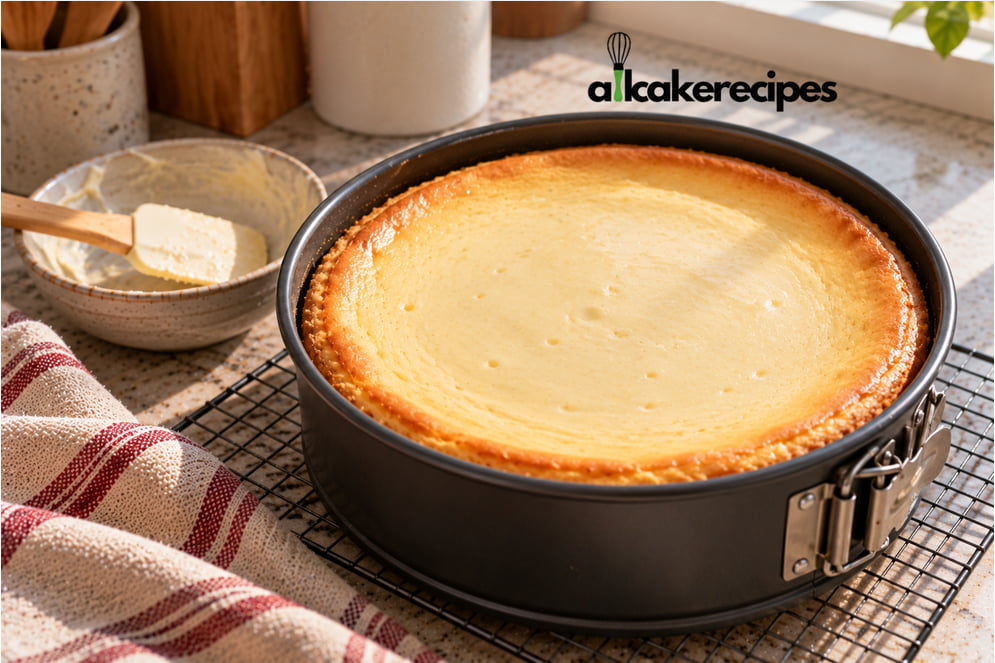
Once the cheesecake is baked, turn off the oven.
Leave the cheesecake inside with the oven door slightly open for approximately 1 hour.
This gradual cooling helps reduce sudden temperature changes that can cause cracks.
Remove the cheesecake from the oven and let it cool briefly at room temperature.
Refrigerate it within 2 hours of removing it from the oven.
Step 9: Refrigerate Until Fully Set
Cover the cheesecake once it has cooled sufficiently and place it in the refrigerator.
Chill for at least 6 hours, preferably overnight.
This resting time allows the filling to firm up and develop its rich, creamy texture.
Step 10: Slice and Serve
Once completely chilled, carefully release the springform ring.
Transfer the cheesecake to a serving plate if desired.
For clean slices, use a sharp knife dipped in warm water, wiping the blade between cuts.
Serve plain or garnish with fresh strawberries, raspberries, or your favorite fruit topping.
Enjoy every creamy bite!
Tips for the Perfect Creamy New York Cheesecake
A few simple techniques can help you achieve a beautifully smooth cheesecake with fewer cracks.
Use Room-Temperature Ingredients
Softened cream cheese blends more easily and helps prevent lumps.
Cold cream cheese can create an uneven filling that requires extra mixing.
Avoid Overmixing the Batter
Mixing too much air into the cheesecake filling can cause it to rise excessively in the oven and sink as it cools.
Use a low mixing speed, especially after adding the eggs.
Don’t Overbake Your Cheesecake
A cheesecake should not look completely firm when you turn off the oven.
The outer edges should be set while the center still moves slightly.
The filling continues to set during cooling and refrigeration.
Cool the Cheesecake Gradually
Sudden changes in temperature may cause cracks on the surface.
Allowing the cheesecake to rest in the switched-off oven with the door slightly open helps it cool more gently.
Chill Overnight for the Best Texture
Although waiting can be difficult, cheesecake benefits from a long chilling period.
Overnight refrigeration produces a firmer texture and makes slicing easier.
Use a Water Bath if You Prefer
A water bath can help cheesecake bake more gently and evenly.
If using one, wrap the outside of the springform pan carefully to help prevent leaks, or place a separate pan of hot water on a lower oven rack.
A water bath is optional for this recipe.
For food safety, always refrigerate your cheesecake promptly and follow the FDA’s food storage guidelines.
Common Cheesecake Mistakes to Avoid
Even experienced bakers sometimes struggle with cheesecake. Here are a few common problems and how to prevent them.
1. Cracks on the Cheesecake Surface
Cracks can develop because of overmixing, overbaking, or sudden temperature changes.
Mix gently, avoid baking until the center is completely firm, and cool the cheesecake gradually.
Remember that small cracks won’t affect the delicious flavor!
2. Lumpy Cheesecake Filling
Cold cream cheese is one of the most common causes of lumps.
Allow the cream cheese to soften before mixing and beat it with the sugar until smooth before adding the remaining ingredients.
3. A Soggy Graham Cracker Crust
A soggy crust may result from excess moisture or water leaking into the springform pan.
Make sure the pan is securely assembled and protected if using a water bath.
4. Cheesecake That Doesn’t Set
An underbaked cheesecake may remain too soft even after refrigeration.
Look for set edges and a gently wobbling center before turning off the oven.
Always allow enough chilling time.
5. Cheesecake That Sinks in the Middle
A cheesecake can sink when too much air has been incorporated into the batter or when it hasn’t baked sufficiently.
Avoid excessive mixing and check the cheesecake carefully near the end of baking.
How to Store New York Cheesecake
Because this recipe contains cream cheese, eggs, and sour cream, proper refrigeration is essential.
How Long Does Cheesecake Last in the Refrigerator?
Store leftover cheesecake in an airtight container or cover it securely.
Keep it refrigerated for approximately 4–5 days.
For the best texture, remove individual slices from the refrigerator shortly before serving.
Can You Freeze New York Cheesecake?
Yes! New York cheesecake freezes well.
Allow the cheesecake to chill completely before freezing.
For best results, freeze individual slices or the whole cheesecake without fruit toppings.
Wrap it tightly in plastic wrap and then in aluminum foil, or use an airtight freezer-safe container.
Freeze for up to 2 months for the best quality.
Thaw overnight in the refrigerator before serving.
Can You Make Cheesecake Ahead of Time?
Absolutely!
In fact, making cheesecake the day before serving is a great idea.
Prepare and bake the cheesecake, allow it to cool safely, and refrigerate it overnight.
Add fresh fruit or other toppings shortly before serving.
Frequently Asked Questions About New York Cheesecake
What Is the Secret to a Creamy New York Cheesecake?
The secret is using full-fat cream cheese, properly softened ingredients, gentle mixing, and careful baking.
Allowing the cheesecake to chill thoroughly also helps create its signature creamy texture.
Can I Make New York Cheesecake Without a Water Bath?
Yes! This recipe can be baked without a water bath.
However, a water bath may help the cheesecake bake more evenly and reduce the chance of cracking.
Why Does My Cheesecake Crack After Baking?
Cheesecake cracks are often caused by overbaking, overmixing, or cooling too quickly.
Try mixing at a low speed and cooling the cheesecake gradually.
How Do I Know When My Cheesecake Is Done?
The outer edges should look set, while the center should still wobble gently.
Avoid waiting until the entire cheesecake becomes completely firm in the oven.
Can I Use Digestive Biscuits Instead of Graham Crackers?
Yes! Digestive biscuits make a delicious cheesecake crust and are a convenient substitute in countries where graham crackers are difficult to find.
Use a similar quantity of finely crushed biscuits and enough melted butter to hold the crumbs together.
Can I Use Low-Fat Cream Cheese?
You can, but the cheesecake may be less rich and have a softer texture.
For a classic New York-style cheesecake, full-fat block cream cheese is recommended.
How Long Should New York Cheesecake Chill Before Serving?
Refrigerate your cheesecake for at least 6 hours, preferably overnight.
This gives the filling enough time to set properly.
What Toppings Go Well With New York Cheesecake?
Classic New York cheesecake is delicious on its own, but you can also serve it with fresh strawberries, raspberries, blueberries, fruit compote, caramel sauce, or a little whipped cream.
Final Thoughts
This New York cheesecake recipe is a beautiful combination of rich cream cheese filling, delicate vanilla flavor, and a buttery graham cracker crust.
It’s the perfect homemade dessert for celebrations, family gatherings, or those moments when you simply want something sweet and comforting.
With a little patience and the right baking techniques, you can create a creamy, bakery-style cheesecake right in your own kitchen.
If you try this recipe, I’d love to hear how it turned out! Leave a comment below, share your experience, and save this recipe for your next special occasion.
If you love creamy homemade desserts, you might also enjoy my Grandma’s Lemon Meringue Pie, with its buttery crust and deliciously tangy lemon filling.
